The following volumes of collected essays derive from a selections of papers delivered at the various conferences. A complete list of volumes published by SPELL can be found on their website. They can all be accessed open access.
From the 2020/22 conference in Neuchâtel:
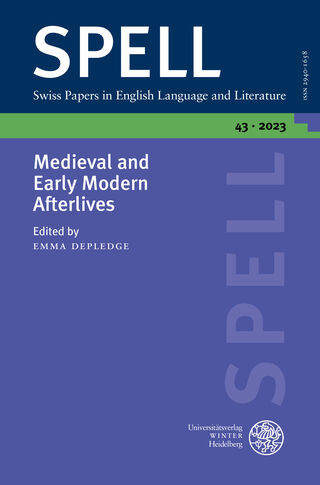
Depledge, Emma (ed.). Medieval and Early Modern Afterlives. Swiss Papers in English Language and Literature 43, Universitätsverlag Winter, 2023.
This volume includes essays which explore the afterlives of Medieval and Early Modern authors, texts, genres, concepts, and material objects. It thus engages with the fields of adaptation studies, book history, conservation practices, intellectual history, and reception studies.
From the 2018 conference in Bern:
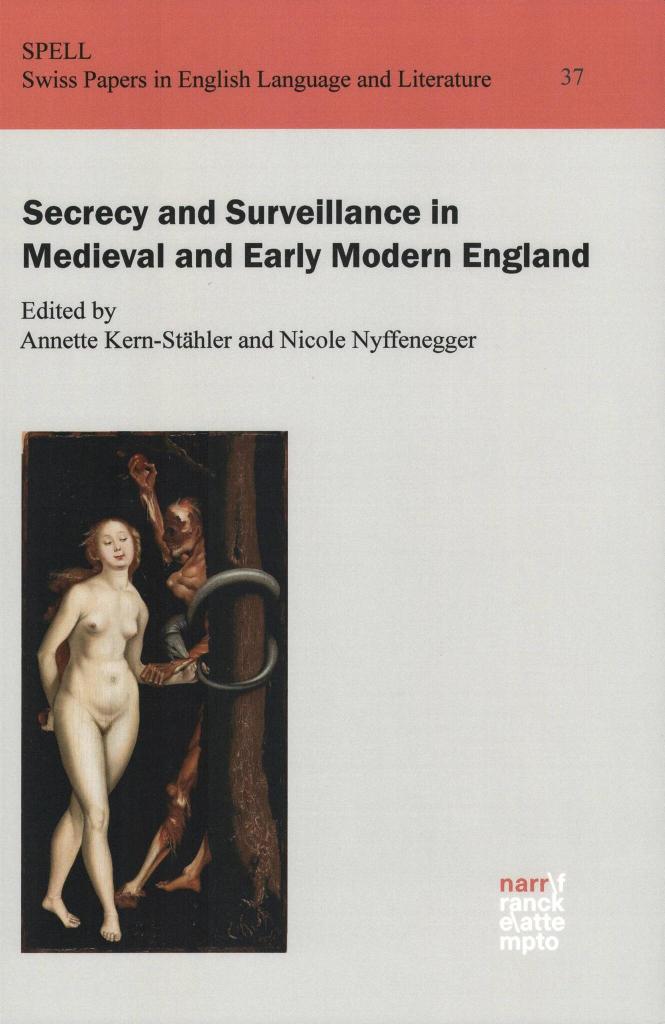
Kern-Stähler, Annette and Nicole Nyffenegger (eds.). Secrecy and Surveillance in Medieval and Early Modern Englans. Swiss Papers in English Language and Literature 37, Narr Francke Attempo, 2019.
This volume explores practices of secrecy and surveillance in medieval and early modern England. The contrinutions address in particular the intersections of secrecy and surveillance with gender and identity, public and private spheres, religious practices, and power structures. Considering a wide range of English literary texts from Old English riddles to the Book of Margery Kempe and the plays and poems of Shakespeare, they seek to contribute to the much-needed historicisation of the practices of secrecy, exclusion and discolsure.
From the 2016 conference in Zurich:
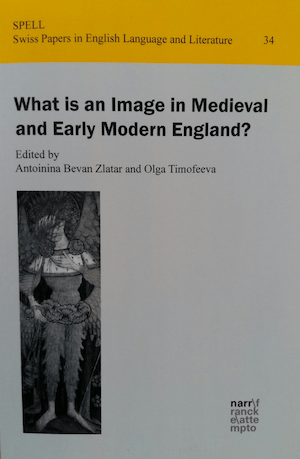
Bevan Zlatar, Antoinina and Olga Timofeeva (eds.). What is an Image in Medieval and Early Modern England? Swiss Papers in English Language and Literature 34, Narr Francke Attempo, 2017.
The premise that Western culture has undergone a ‘pictorial turn’ (W.J.T. Mitchell) has prompted renewed interest in theorizing the visual image. In recent decades researchers in the humanities and social sciences have documented the function and status of the image relative to other media, and have traced the historyy of its power and the attempts to disempower it. What is an Image in Medieval and Early Modern England? engages in this debate in two interrelated ways: by focusing on the (visual) image during a period that witnessed the Reformation and the invention of the printing press, and by exploring its status in relation to an array of texts including Arthurian romance, saints’ lives, stage plays, printed sermons, biblical epic, pamphlets, and psalms. This interdisciplinary volume includes contributions by leading authorities as well as young scholars from the fields of English literature, art history, and Reformation history. As with previous collections of essays produced under the auspices of the Swiss Association of Medieval and Early Modern English Studies, it seeks to foster dialogue between the two periods.
From the 2014 conference in Fribourg:
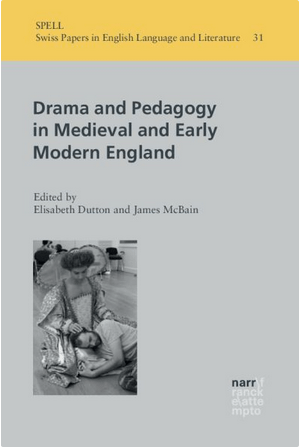
Dutton, Elisabeth and James McBain (eds.). Drama and Pedagogy in Medieval and Early Modern England. Swiss Papers in English Language and Literature 31, Narr Francke Attempo, 2015.
This wide-ranging volume explores relationships between drama and pedagogy in the medieval and early modern periods, with contributions from an international field of scholars including a number of leading authorities. Across the medieval and early modern periods, drama is seen to be a way of disseminating theological and philosophical ideas. In medieval England, when literacy was low and the literguy in Latin, drama translated and transformed spiritual truths, embodying them for a wider audience than could be reached by books alone. In Tudor England, humanist belief in the validity and potential of drama as pedagogical tool informs the interlude, and examples of dramatized instruction abound on early modern stages. Academic drama is a particularly pregnant locus for the exploration of drama and pedagogy: universities and the Inns of Court trained some of the leading playwrights of the early theatre, but also supplied methods and materials that shaped professional playhouse compositions.
From the 2012 conference in Lausanne:
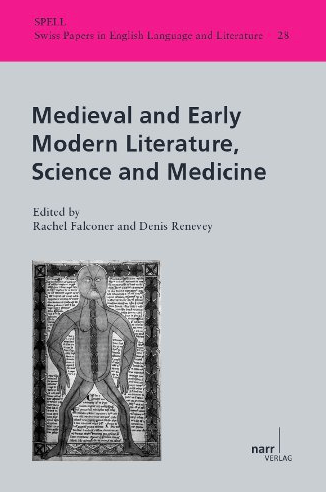
Falconer, Rachel, and Denis Renevey (eds.). Medieval and Early Modern Literature, Science and Medicine. Swiss Papers in English Language and Literature 28, Gunter Narr, 2013.
This inter-disciplinary volume investigates the contiguities and connections that existed between poetic and scientific ways of knowing in the medieval and early modern periods. The aesthetic aspects of medical texts are analysed, alongside the medical expertise articulated in literary texts. Substantial common ground is discovered in the devotional, medical, and literary discourses pertaining to health and disease in these two periods. Medieval and early modern theatres are shown to have staged matter pertaining to contemporary science, provoking and challenging scientific claims to authority, as well as political ones. Finally, the volume demonstrates how certain branches of learning, for example, marine navigation and time-measurement, were represented as forms of both art and science.
From the 2010 conference in Geneva:
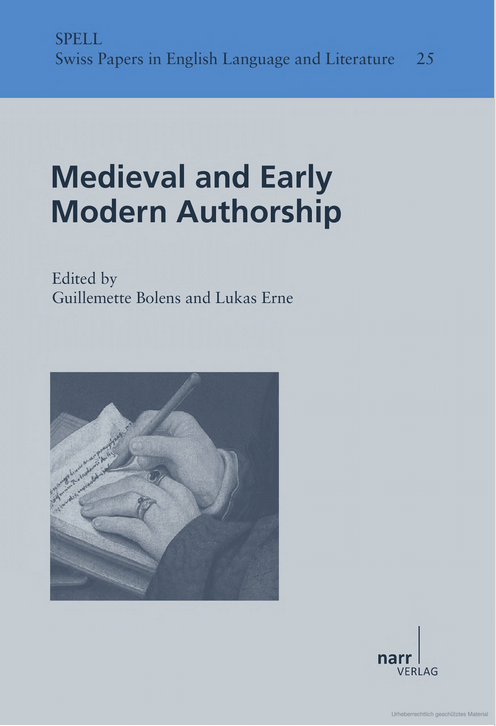
Bolens, Guillemette and Lukas Erne (eds.). Medieval and Early Modern Authorship. Swiss Papers in English Language and Literature 25, Gunter Narr, 2011.
Reports of his death having been greatly exaggerated, the author has made a spectacular return in English studies. This is the first book devoted to medieval and early modern authorship, exploring continuities, discontinuities, and innovations in the two periods which literary histories and institutional practices too often keep apart. Canonical authors receive sustained attention (notably Chaucer, Gower, Shakespeare, Jonson, Milton, and Marvell), and so do key issues in the current scholarly debate, such as authorial self-fashioning, the fictionalisation of authorship, the posthumous construction of authorship, and the nexus of authorship and authority. Other important topics whose relations to authorship are explored include adaptation, paratext, portraiture, historiography, hagiography, theology, and the sublime.
From the 2008 conference in Bern:
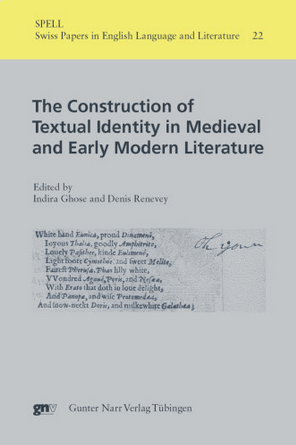
Ghose, Indira and Denis Renevey (eds.). The Construction of Textual Identity in Medieval and Early Modern Literature. Swiss Papers in English Language and Literature 22, Gunter Narr, 2009.
This volume sets out to bridge the gap between medieval and early modern literary studies. It contains a selection of essays by both distinguished experts and young scholars in either field, and marks the foundation of the Swiss Association of Medieval and Early Modern English Studies. The contibutions address the crucial issue of how texts engage with other texts. Theys do so in a variety of ways, focusing on pretexts, paratexts, and marginalia. What emerges is an insight into the way texts shape identity – be it that of the author, the readership, or the texts themselves.
 Swiss Association of Medieval and Early Modern English Studies